- antecedent
The element that states the prior condition in any conditional statement. For example, "It doesn't rain" is the antecedent in both
"If it doesn't rain, then we'll have a picnic." and
"It will reach ninety degrees today if it doesn't rain."
In a true material implication, the truth of its antecedent is incompatible with the falsity of its consequent.
- Anthony, Susan Brownell (1820-1906)
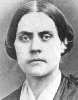
American political activist. As head of the American Woman Suffrage Association and editor of the radical newspaper, The Revolution, Anthony campaigned vigorously for the abolition of slavery the rights of women. Having cast a ballot in the election of 1872, Anthony was arrested and fined; despite her tireless efforts, she did not live to see wide-spread adoption of women's right to vote.
Recommended Reading: The Elizabeth Cady Stanton-Susan B. Anthony Reader: Correspondence, Writings, Speeches, ed. by Ellen Carol Dubois and Gerda Lerner (Northeastern, 1992) {at Amazon.com} and Geoffrey C. Ward, Martha Saxton, Ann D. Gordon, Ellen Carol Dubois, and Paul Barnes, Not for Ourselves Alone: The Story of Elizabeth Cady Stanton and Susan B. Anthony: An Illustrated History (Knopf, 1999) {at Amazon.com}.
Also see PBDW, ColE, and MDBW.
- anthropic principle
Belief that the existence of human life entails certain features of the physical world. In a minimal form, this view merely points out that we would not be here to observe natural phenomena were they not compatible with our existence. Stronger versions of the anthropic principle, however, seem to rely upon the idealistic notion that the universe could not exist without intelligent observers.
Recommended Reading: John D. Barrow and Frank J. Tipler, The Anthropic Cosmological Principle (Oxford, 1988) {at Amazon.com} and Errol E. Harris, Cosmos and Theos: Ethical and Theological Implications of the Anthropic Cosmological Principle (Humanity, 1992) {at Amazon.com}.
Also see Robert C. Koons and SEP.
- anthropomorphism
Attribution of human characteristics to non-human things. Thus, an anthropomorphic religion treats god as a personal being, and anthropomorphic natural theories may suppose that plants, animals, or the earth itself think and feel in the same ways that we do.
Recommended Reading: Eileen Crist, Images of Animals: Anthropomorphism and Animal Mind (Temple, 2000) {at Amazon.com} and Anthropomorphism, Anecdotes, and Animals, ed. by Robert W. Mitchell, Nicholas S. Thompson, and H. Lyn Miles (SUNY, 1996) {at Amazon.com}
Also see BGHT, ColE, ISM, CE, and MacE.
- antinomy
A pair of equally defensible yet contradictory conclusions. Kant employed the antinomies of pure reason to show the consequences of misapplying regulative principles in the attempt to gain knowledge of noumena.
Recommended Reading: Victoria S. Wike, Kant's Antinomies of Reason: Their Origin and Their Resolution (U. Press of America, 1982) {at Amazon.com}.
Also see OCP.
- Antisthenes (445-360 B.C.E.)
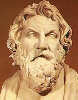
Greek philosopher, friend of Socrates, and founder of cynicism. Fragmentary reports suggest that Antisthenes denied the possibility of contradiction and supposed that the wise can never act foolishly.
Recommended Reading: The Cynics: The Cynic Movement in Antiquity and Its Legacy, ed. by R. Bracht Branham and Marie Odile Goulet-Caze (California, 2000) {at Amazon.com}.
Also see IEP, OCP, ELC, ColE, The Ecole Initiative, and MacE.
- antithesis
Reversal of an initial conviction; see thesis / antithesis / synthesis.
- anxiety {Ger. Angst}
According to many existentialist philosophers, the normal emotional response to the overwhelming responsibility entailed by human freedom.
- apeirwn [apeirôn]
Anaximander's Greek word for the boundless extent of the universe as undifferentiated matter. Although Plato made only scant reference to this notion of what is unlimited, the neoplatonic philosophy of Plotinus elevated it as the material principle of all change.
Recommended Reading: Paul Seligman, The Apeiron of Anaximander; A Study in the Origin and Function of Metaphysical Ideas (Greenwood, 1974) {at Amazon.com} and F. E. Peters, Greek Philosophical Terms: A Historical Lexicon (NYU, 1967) {at Amazon.com}.
Also see Tim Rohrer, OCP, and PP.
- apodeictic
The characteristic feature of any proposition that states what is necessary (or impossible), perfectly certain (or inconceivable), or demonstrably true (or false). See problematic / assertoric / apodeictic.
Also see OCP.
- aporia [aporia]
Greek term for a difficulty or puzzle (literally, "with no pathway"). Aristotle commonly used this term to signify a group of individually plausible but collectively inconsistent statements. The reconciliation of such statements by considering alternative solutions, he supposed, is the chief business of philosophy.
- a posteriori
Depending upon or being justified by reference to experience; see a priori / a posteriori.
- appearance / reality
Distinction between the way things seem to be and the way they are. The merely apparent is often supposed to be internal, subjective, or temporal, but available for direct awareness, whereas the the real is supposed to be external, objective, or eternal, but known only inferentially. Drawn in different terms and applied in various contexts, the distinction is important in the philosophies of Plato, Descartes, Kant, and Bradley.
Recommended Reading: Julius Moravcsik, Plato and Platonism: Plato's Conception of Appearance and Reality in Ontology, Epistemology, and Ethics, and Its Modern Echoes (Blackwell, 2000) {at Amazon.com} and John W. Yolton, Realism and Appearances: An Essay in Ontology (Cambridge, 2000) {at Amazon.com}.
Also see OCP.
- apperception
Self-conscious awareness (as opposed to sensory perception of external objects), including especially the operation of the will, in the philosophy of Leibniz and Kant.
Recommended Reading: Mark Kulstad, Leibniz on Apperception, Consciousness, and Reflection (Philosophia Verlag, 1991) {at Amazon.com}.
Also see OCP.
- Appiah, Kwame Anthony ( - )
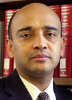
African American philosopher whose work on the foundations of probabalistic semantics is exemplified in Assertions and Conditionals (1985) {at Amazon.com} and Truth in Semantics (1986){at Amazon.com}. He is also the author of In My Father's House: Africa in the Philosophy of Culture (1992){at Amazon.com}, a discussion of the influence of racial concepts on the development of African literature and art, and Color Conscious: The Political Morality of Race (1996){at Amazon.com}. A native of Ghana, Appiah is Past President of the Society for African Philosophy in North America.
- applied ethics
Branch of ethics that considers the practical application of ethical principles to specific issues of social or personal concern.
Recommended Reading: Peter Singer, Applied Ethics (Oxford, 1986) {at Amazon.com}; Peter Singer, Practical Ethics (Cambridge, 1993) {at Amazon.com}; and Anthony Weston, A 21st Century Ethical Toolbox (Oxford, 2000) {at Amazon.com}.
- a priori / a posteriori
Distinction among judgments, propositions, ideas, arguments, or kinds of knowledge. In each case, the a priori is taken to be independent of experience, which the a posteriori presupposes. An a priori argument, then, is taken to reason deductively from abstract general premises, while an a posteriori argument relies upon specific information derived from sense perception. The necessary truth of an a priori proposition can be determined by reason alone, but the contingent truth of an a posteriori proposition can be discovered only by reference to some matter of fact. Thus, for example:
"3 + 4 = 7." is known a priori.
"Chicago is on Lake Michigan." is known a posteriori.
Rationalists typically emphasize the importance of a priori ideas and arguments as the foundation of all knowledge. Kant held that synthetic a priori judgments are preconditions of experience and form the basis for mathematics and science. Empiricists, on the other hand, usually hold that all a priori propositions are merely analytic, so that we must rely on a posteriori propositions for significant knowledge of the world. Kripke challenges even the identification of this distinction with that between the necessary and the contingent.
Recommended Reading: Immanuel Kant, Prolegomena to Any Future Metaphysic (Hackett, 1977) {at Amazon.com}; New Essays on the A Priori, ed. by Paul Boghossian and Christopher Peacocke (Oxford, 2000) {at Amazon.com}; A Priori Knowledge, ed. by Albert Casullo (Dartmouth, 1999) {at Amazon.com}; and Robert Greenberg, Kant's Theory of a Priori Knowledge (Penn. State, 2001) {at Amazon.com}.
Also see OCP, J. A. Brook, IEP, John Kearns, and BGHT.
- Aquinas, Thomas (1224-1274)

Italian Dominican philosopher and theologian who argued that reason has an independent function apart from faith and whose Christian Aristotelianism eventually became the official philosophy of the Roman Catholic Church.
For a discussion of his life and works, see Aquinas.
©1997-2001 Garth Kemerling.
Questions, comments, and suggestions may be sent to: gkemerling@philosophypages.com
